


 YouTube
 Apple Podcasts
 Spotify
 Youtube Music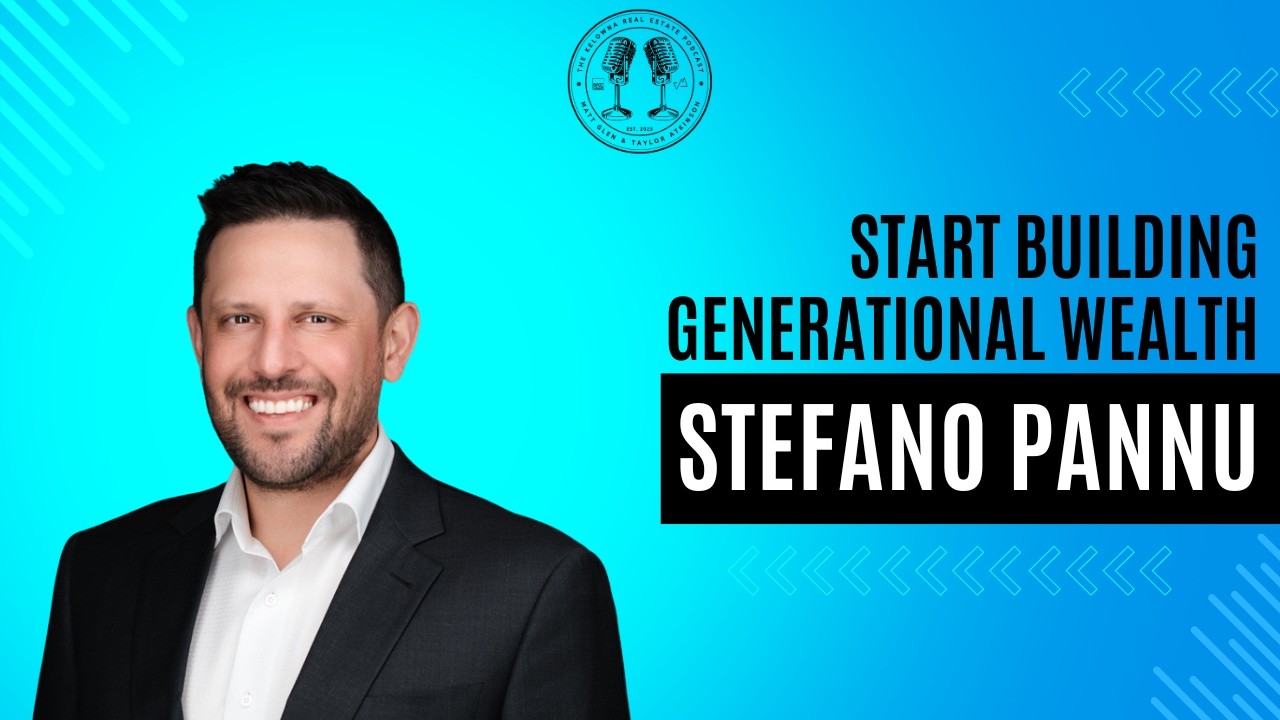
WATCH
▶️ Watch this episode on YouTube
***
EPISODE DESCRIPTION
Episode 125: Matt and Taylor are joined by Stefano Pannu, B.A., CFP®, CLU®, CIM®, FCSI®.
Stefano is a Partner & Principal Financial Advisor at Noble Pannu Wealth Management Ltd from Kelowna, BC, who has been supporting high net worth clients since his Certified Financial Planner (CFP) designation in 2016.
Stefano quickly developed a passion for holistic financial planning in helping clients reach their ultimate financial goals, carrying expertise across all six areas of financial planning: investment planning, retirement planning, tax planning, estate planning, cash management and risk management. With each client’s unique big picture in mind, Stefano creates detailed financial plans that give clients clarity and confidence.
Stefano and his wife Danielle moved to Kelowna in 2019 to be closer to family for their children. They love their little corner of Glenmore, and all the family time near the lakes and trails of the Okanagan. Stefano, a former midfielder on the Simon Fraser University varsity soccer team, holds Kelowna Rockets seasons tickets, and he’s a pretty big fan of just about every other sport, including the English Premier League and NFL. Every August, he participates in the 200-kilometre Ride to Conquer Cancer, cycling all the way from Vancouver to Hope in support of the BC Cancer Foundation.
Stefano is here to discuss:
→ What financial planning actually is - advice, guidance, concept, review, and monitoring - across six disciplines - investments, insurance, cashflow management, and estate, retirement, and tax planning.
→ How to understand deductions and taxation as a salaried (T4) employee, and the difference between gross vs net income.
→ The truth about Canada's Pension Plan (CPP) - is it really going to collapse or is it all just panic?
→ The 2 ways to build wealth tax free, owning a primary residence or a Tax-Free Savings Account (TFSA), how they are tax-free, and the factors to consider when investing with your TFSA.
→ How RRSPs work as a deferring tax tool, and various situations where they could be utilized before retirement.
→ One of the best kept secrets in Canada, the First Home Savings Account (FHSA), and why everyone who has never been a home owner should register one today.
→ Wealth builders for your kids including how RESPs work, informal vs formal trusts, and why more parents are opting for whole life insurance as a generational wealth builder.
→ How non-registered accounts work and Canadian income tax is filed.
***
LISTEN TO PAST APPEARANCES
Stefano's 1st Appearance in Episode 5: https://www.kelownarealestatepodcast.com/5-stefano-pannu/
Stefano's 2nd Appearance in Episode 33: https://www.kelownarealestatepodcast.com/33-stefano-pannu/
Stefano's 3rd Appearance in Episode 34: https://www.kelownarealestatepodcast.com/34-stefano-pannu/
***
CONNECT WITH THE GUEST
🌎 Noble Pannu Wealth Website: www.noblepannuwealth.com
📸 Noble Pannu Wealth Instagram: @noble_pannu_wealth
📧 Stefano Pannu's Email: stefano@noblepannuwealth.com
📸 Stefano Pannu's Instagram: @stefpannu
🔗 Stefano Pannu's LinkedIn: @StefanoPannu
***
CONNECT WITH THE SHOW
🎙️ Kelowna Real Estate Podcast: www.kelownarealestatepodcast.com
📺 Kelowna Real Estate Podcast YouTube: @KelownaRealEstatePodcast
📸 Kelowna Real Estate Podcast Instagram: @kelownarealestatepodcast
***
CONNECT WITH MATT
🌎 Matt Glen's Website: www.venturecommercial.ca/our-team/matt-glen
📬 Matt Glen's Email: matt.glen@venturecommercial.ca
📸 Matt Glen's Instagram: @realmattglen
***
CONNECT WITH TAYLOR
🌎 Taylor Atkinson's Website: www.venturemortgages.com
📬 Taylor Atkinson's Email: taylor@venturemortgages.com
📸 Taylor Atkinson's Instagram: @VentureMortgages
***
00:00:00 Taylor Atkinson
Welcome back to the Kelowna Real Estate Podcast. I'm your mortgage broker host, Taylor Atkinson.
00:00:00 Matt Glen
And I'm your commercial agent host, Matt Glen. What is happening today, Taylor?
00:00:07 Taylor Atkinson
Well, it's been happening for a little bit, but conflict in Iran, technically Strait of Hormuz is open. They've come to some agreements in the Middle East. So, I mean, fingers crossed, everything moves forward. And I mean, not only just for obviously global. piece -ish, but economically bond market has seen, you know, some downward pressure, some fixed rates have kind of relaxed a little bit. So, uh, yeah, it's back to, I don't want to say normal, but like, yeah, we're in that less volatile time now that hopefully there's some certainty in place.
00:00:45 Matt Glen
Okay. It's less volatile today, which is Wednesday. What day are we? Wednesday to 17th. But when this comes out next week, I wonder how. I know. I know. That's why, like, I don't, yeah, there is some positivity. It is very positive. I noticed that the markets went up right away. It is nice. Like, man, nobody wants to see ongoing wars that have no end. So like,
00:01:04 Taylor Atkinson
no,
00:01:05 Matt Glen
it is definitely positive.
00:01:06 Taylor Atkinson
And then, yeah, I mean, talking about the markets, easy segue we had on Stefano Panu from Noble Panu Wealth, which, you know, is a firm that I work with very closely. They're local in town here. We've had Stefano on in previous shows. They've been a lot of fun. Yeah. He comes in and adds a bunch of value. So we want to kind of talk about like a life cycle of a Canadian in terms of like financial planning. What products to take advantage of at what stage in your life? Yeah. And there's so many different directions you can go. Like if you're self -employed, employed, if you have kids, if you're married or not, or in real estate, you know, for me, I'm just going to kind of like throw out like what, like I'm trying to achieve. It's not right for everyone, but I think, you know, we recently had kids. I took out whole life policies on them. I think like generational wealth in whole life policies is a massive opportunity to help. It does nothing for me or likely my kids, although you can leverage that, but you know, for grandkids, like my grandkids set up an RASP account for them, which we talk about on the show, set up a TFSA account when they're of age, FHSA account, first home savings account, which is huge, which like, it's crazy how many people do. No, no. But I'm saying like, I will, it's in the life cycle for them. Yeah, no, you have to be of age first, but like, it's crazy how many people are first time home buyers who have not.
00:02:26 Matt Glen
heard about that yeah that was a major takeaway from the show like man register for that now i guess you have this calendar year yeah so you basically accumulate eight thousand dollars of room every year that you're registered you don't have to fund it but you have to like register the count so get that done and then you know moving forward i think like tfsa is low hanging fruit everyone should try and maximize those rrsps maybe if you're like in high income
00:02:31 Taylor Atkinson
so you basically accumulate eight thousand dollars of room every year that you're registered you don't have to fund it but you have to like register the count so get that done and then you know moving forward i think like tfsa is low hanging fruit everyone should try and maximize those rsps maybe if you're like in high income earning years, buy cash flowing real estate, maybe start or acquire a business. Because I do think being incorporated, self -employed, being able to have like retained earnings, you're allowing to like defer tax. I think that's a really good option. And then like the later years, this is kind of what we talked about with Stefano a little bit, but was like building some trust agreements and generational planning, which gets to be a pretty sophisticated level. But point I'm trying to make with all this kind of word vomit is like, there's so many cool things you can do. And you just have to do small little movements. Like not one thing is going to make you rich, right? Don't just be like, I need to double down on an investment portfolio. Like there's so many different tactics that people can utilize. So.
00:03:35 Matt Glen
Well, I think that you should be trying to utilize like the tax incentivized products, right? Like to totally like have a tax strategy. Like you're big on that, which is honestly a huge thing I've learned from you. Just knowing you over the years, I've known you is. That's super important. And then I guess after that, what works for you and what you want to do. So like ever since we recorded the show with Stefano a few days ago, I was thinking like, let's say a person, you're in your thirties or forties and you have 200K. Like we did a show with Stefano where we did a big debate where I put your money in the stock market or you put your money in real estate. And you and I were on team real estate and he was on stock market, which is a great episode. An earlier one for us, but super interesting. Yeah. Now, like have your thoughts on this change at all recently, like with the market, how it is now or. What are you thinking about that now? Good question.
00:04:18 Taylor Atkinson
question. I'm always a believer as long as capital gains exemption on your primary residence is still in place in Canada, which I believe it should always be and will always be. I do think people should own their own home. There are lots of advantages. Sometimes it's not the best decision. Like in the past couple of years, honestly, you probably would have been better off to rent because interest rates were higher. Well, even in the next couple of years,
00:04:41 Matt Glen
years, I don't think long term is a good idea, but in the short term.
00:04:45 Taylor Atkinson
Yeah. And then there's like caveats to that, like if you have that extra income helper, like a basement suite that you're renting out. And I do think at least one rental property is good for people because there's a bit of a tax strategy that you can utilize, you know, to leverage your own home, get some tax efficiencies and then go buy a rental property or non -registered account. So it's coined like the Smith maneuver. And, you know, that's goes back to another episode we did earlier on. So there's. there's tons of different ways to structure it but i i still believe smart leverage in real estate will outperform the market because it's hard to leverage in like the stock market with like mitigating risk but that's obviously i'm biased so so i threw into chat gpt the question i just asked like what is ideal and like basically if you count everything like the cash flow from real estate and like reinvesting all the money that you make in the stock market like basically says that because of leverage
00:05:26 Matt Glen
so so i threw into chat gpt the question i just asked like what is ideal and like basically if you count everything like the cash flow from real estate and like reinvesting all the money that you make in the stock market like basically says that because of leverage In the initial years, like if the property is appreciating like just over an average amount of four or 5 % a year, whatever it is, three to five, real estate has a major advantage in the short term. But then as a longer it goes on, you have less leverage, then it kind of evens out again. But once you have that mortgage hate off and you're just cash flowing your investment property, then it starts to be advantage real estate again. So I think you're right. I think best thing in cash flowing real estate is probably the way to go still. Although. I have changed my mindset a bit just because of the market and just because of what the stock market has been doing. I feel like through your TFSAs or wherever else you're going to go, I think you need to have some exposure in the stock market too, right through an index fund or whatever it is. But I feel like diversifying it to both is probably a great way to go. Or if you even took your cash flow in real estate and invested the excess cash flow into an index fund, I think that's probably... what I would do right now if I was in that situation.
00:06:34 Taylor Atkinson
I think there is a really powerful piece to have some form of liquidity. Like if you have some gas in reg or non reg. tfsa but like to have that as a bit of a fallback and have that to be you know quick like if you see a property you want to buy or rehab or there's a value add and you have that instant access i think it's powerful so yeah smart leverage make sure cash flow is there tax efficiency having some liquidity like there's lots of buckets that we can choose to fill and prioritize and that's why i love Chatting with Stefano and my CPA, you know, we collectively have those calls. Here's something funny I'm going to throw at you just as a surprise because I like to surprise you. This week, and this is very unlike me, anyone that knows me sees me driving around in my crappy track.
00:07:23 Matt Glen
I love your truck, dude. I love it. So do I.
00:07:24 Taylor Atkinson
It's a great runner, man. It's a great runner, but it's getting some rust on it. So I did buy a new track, which is like, yeah, shock and awe, right? Yeah. so nobody knows this is breaking news like emily doesn't even know so i haven't picked it up yet i'll probably pick it up friday the point i'm trying to make on this is like i don't think you know buying like a brand new like super expensive vehicle is always the right move obviously there's like a cost to it but just to like oversimplify this let's say i'm buying this truck for fifty thousand dollars you know i have the ability to either you know pull from my investments and pay for it in cash or, you know, I can finance it. And the financing rate right now on it is like 7%. So gut instinct would be like, that's a pretty bad rate. Why would I not, you know, just buying cash? Because otherwise I'm going to be taken from my investments, which say would be about the same. But the thing I'm going to do is I will leverage it. I am working on financing it right now. And why I'm doing that is one. You know, as a self -employed person who has properties, I am allowed to write off a portion of vehicle expenses, right? So to have that interest that is paid on it, I'm then able to write that off. So it's actually cheaper money than it would be if I'm just looking at it, you know, straight up. It also allows me to keep liquid and keep investments in a registered or non -registered account. And that way they can continue to grow and compound. And thirdly, you know, if I didn't want to pull from my investments, I'd have to pull from my corp. pay myself more whether that's dividends or t4s so then i could buy it outright so it allows me to you know pay myself less over the next couple years and facilitate that so just like roughly say i'm buying the truck for fifty thousand dollars but it's costing ten thousand dollars to finance it over the next two years you know i'm going to write off probably six thousand dollars of that interest so it's really only costing me four thousand dollars to either then keep that extra 50 grand in like a TFSA, non -registered account or something, or, you know, pay myself over the next couple of years and stay in a lower tax bracket. The point I'm making is like, none of this is exciting. It's like, there's a minimal amount, right? Like maybe I'm adding five, six, $7 ,000 worth of like net worth over the next couple of years, but that's, what's fun about financial planning. Like you can just. constantly make these little tweaks and work with someone like Stefano and your accountant and a mortgage broker and a real estate agent and like just keep fine tuning things to squeeze those extra few thousand bucks out and it will slowly start to like snowball you know but there's not one move where it's like oh I'm doing this and and my life's done like set it and forget it so yeah anyways you'll see me bombing around town hopefully.
00:10:14 Matt Glen
some new wheels. Dude, I love that story. You've put a lot of thought into, uh, I feel like most people just go to the dealership, rip on one, and that's the end of that.
00:10:20 Taylor Atkinson
that. Yeah. I mean, I, my mind is a little sick that way, I guess.
00:10:24 Matt Glen
Put some sickness on me, brother. I need it. Yeah. This is why I love, uh, co -hosting the show with you because you give me insights like that.
00:10:30 Taylor Atkinson
That is, uh, a different approach. Yeah. This is probably why I didn't tell Emily. She's been bugging me to get a truck for years. We're going to be listening to this. Yeah. If I don't pick up the truck Friday, she'll be like, what?
00:10:42 Matt Glen
So what'd you do with the other?
00:10:43 Taylor Atkinson
I still, I got to sell it at this point. So nice. Yeah. I think we should just jump into the show. Really. If someone is interested, has any questions, obviously this isn't like, you know, financial advice from any of us, including Stefano on the show. Like you should reach out to him because specific situations really apply differently. So don't just take it and run with it, connect with, you know, a professional in the industry and get some proper advice.
00:11:09 Matt Glen
I would agree with that. He's a fun. person to talk to about these kinds of things. So really happy to have him on again.
00:11:15 Taylor Atkinson
Yeah. And he's super generous with his time. So yeah, we're still trying to bump up that YouTube subscriber list. So if you guys can log into YouTube and give us a subscribe, that would be awesome. Yeah, that would be very, very, very much appreciated.
00:11:28 Matt Glen
Thank you to everybody. Enjoy the show.
00:11:33 Taylor Atkinson
All right, Stefano Panu, welcome back to the Corner Real Estate Podcast. How are you doing, buddy?
00:11:38 Stefano Pannu
Yeah, good. Yeah, it's been a... busy year lots going on in 2026 here we are halfway through the year and yeah it's uh going well we're right at the halfway point i should point that out yeah and this is the fourth time you've been back on i think but the second and third time was like a dual show like two segments so yeah if anyone hasn't listened to those episodes they were
00:11:46 Taylor Atkinson
right at the halfway point i should point that out yeah and this is the fourth time you've been back on i think but the second and third time was like a dual show like two segments so yeah if anyone hasn't listened to those episodes they were great, tons of value. I think they'll obviously learn a lot about you, but you are just like so into the nitty gritty of planning and helping people through financial planning. So we wanted to kind of go through like the life cycle of a Canadian in terms of how it looks to be positioned well for finances, I guess. So we kind of brainstormed a few ideas, but do you want to maybe take it away? Sorry to put you under the gun here, but yeah, I kind of had some ideas and would love to hear your feedback on them.
00:12:27 Stefano Pannu
Yeah, so I think what would make the most logical sense would probably be to start with somebody who's beginning, really not at the beginning of their life, but maybe like the beginning of their working years and earning an income. And then we can talk about the different options available in environments that they would have access to. And then from the air, just build off of some of the other stuff as life evolves that they can consider when it comes to incorporating other life events like partners and kids. If they're running a business like that type of stuff.
00:12:57 Matt Glen
Yeah, absolutely. Let's do it. Yeah,
00:12:59 Stefano Pannu
when we talk about financial planning, we always go back to what the Canadian Association defines as financial planning for certified financial planners or CFP holders. FP Canada is the association that if you have your CFP designation that outlines these guidelines around what financial planning actually is. Because our industry does a really good job of throwing around terms or acronyms that maybe most people don't understand or get mixed up or they become convoluted. And so what financial planning... actually is advice, guidance, concept, review and monitoring of six particular areas of your financial life. So what are those six particular areas? Well, it's not just limited to investment planning or risk management, which is insurance planning, but also the discussion around managing cash flow. So where do the dollars come from versus where they're going and the different environments in which they're being received in. Estate planning. So, you know, what is the idea of like all of the assets that you've accumulated? What does that look like when you're looking to essentially pass on to either next generation or succession plan to other individuals? Retirement planning, so building your wealth, what does that all amount to in the next phase of life and this idea of retirement? And the biggest one that I always refer to is the tax planning, that the tax really overlays all the other areas of financial planning and everything that we do should be with an eye for tax efficiency because we pay such high rates of tax as Canadian. that it's very much worthwhile to put a lot of attention to that component of your financial plan.
00:14:29 Taylor Atkinson
Yeah, absolutely. When we talk about the different options available to Canadians to receive this type of advice,
00:14:30 Stefano Pannu
we talk about the different options available to Canadians to receive this type of advice, there's definitely different levels in which you progress through from the different institutions available, whether it's from, you know, getting advice at the bank branch level versus getting advice from nationalized firms, let's say. Getting advice from your bank brokerage firms versus getting advice from full -scale financial planning or wealth management. institutions. The level in which you would get advice diced up into those different levels of financial planning would vary based off of the institution in which you are dealing with.
00:15:09 Matt Glen
What about getting advice from your local realtor? What level does that fall into?
00:15:13 Stefano Pannu
Well, see, like to me and the way that we approach it is that's holistic planning. You'd like as a holistic planner, not only should you be talking about someone's financial plan with their accountant, lawyer, bookkeeper, with their realtor, with their mortgage broker, it's their entire what we call center of influence should be involved in that conversation to help address whatever it is they're looking to achieve.
00:15:33 Taylor Atkinson
I think there's a huge takeaway there is like. You know, me as just an individual broker, there's only really so much value I can add and same with you, Matt, and same with you, Stefano. But like collectively, when you're working with a team, like somebody might share information with Stefano about their like midterm financial goals, or maybe you know something about, you know, a life insurance policy that they have some coverage, which. you know, wasn't shared to me. So if we can kind of like put all that information together and figure out like the best strategy, there's so much more value we can add together. So yeah, I really appreciate working with you with clients on that.
00:16:05 Stefano Pannu
Yeah. So let's dive in. So maybe we can start this idea of the life cycle of a financial plan at a kind of very broad level. What are some of the options available to them? Questions we would ask, what we would address, some of the things they should look for when it comes to getting started in their financial planning lives.
00:16:21 Matt Glen
Let's say like there's an individual, they're working, they're earning what we call a salaried or T4 income.
00:16:21 Stefano Pannu
there's an individual, they're working, they're earning what we call a salaried or T4 income. So the biggest thing to understand about earning income that way is from a tax perspective. This type of income earning creates a bit of rigidity, meaning that there's not much flexibility around what you can do as you're earning this income, meaning that your employer is paying you, whether it's a couple times a month or every other week, this salary or this income that you're making. And then the biggest thing that happens is, yes, there's maybe a few remittances that happen off of that income. Say you're working for like municipal. municipalities or public service you'd have you know contributions to like pension plans that would come off of that you'd have some expenses around like you know, participating in some of the benefits programs that you're participating in through your employer. You may be if you're part of a union, you would have some of those union dues that you're entitled to contribute to. There's some participation in government benefit programs like our Canadian pension plan that would come off of that income. But really, you know, after you earn that dollar, the next big event that happens on that dollar that you're earning the salary off of is taxes. Then you have to remit. for provincial and federal taxes and why that's important to understand is because as you earn income then you pay taxes as net of that tax dollar that then you have to manage your lifestyle with so when we talk about you know cash flow planning you definitely want to be aware of what that net dollar looks like to you after some of those deductions pre -tax and then the tax happens, what it is that you have net left over to manage what's happening in your life. You know, that's like paying the bills, making the car payment, you know, making the mortgage payment, whatever else those expenses are has to be dealt with at that net level.
00:18:10 Taylor Atkinson
With CPP, just to go off on a bit of a tangent, do you feel that like the CPP program is going to be there in 30, 40, 50 years? Is it valued as it was? you know, 50 years ago?
00:18:24 Stefano Pannu
Yeah. So, you know, the concern that comes out is that CPP is a program in which the participants, the current participants are funding the current individuals who are withdrawing from the program, like the retirees. And so what the concern was, was that there's not enough participants coming up. in age as Canadians are income earners versus the individuals that are like the baby boomers that are entering that next phase of life and then will be drawing on the program. So there is kind of this idea of this inverted pyramid happening with the plan. Now, actually, it's funny enough, I just listened to a presentation through our FP Canada Association from CPP Investments. And our CPP... plan is one of the best funded and one of the best managed pools of money in essentially the world. So there's reports, there's a company out of the US, I can't remember exactly who it is, but they do a study across all sovereign wealth plans, including government funded pension plans. And CPP is consistently ranked not only like in the top quartile, but like in the top handful. of sovereign wealth, pension plan style pools of money across the world. And one of the unique things that CPP does is they actually have a division in the government that's their actuarial division. So this actuarial division actually then runs the reports to say, based off of the demographics in Canada, what's the sustainability and the lifespan that CPP can provide for? And so that number at one point was declining, but has been consistently increasing recently. Now the numbers have been updated that the program can easily take Canadians into 25, 30, 50 years from now to be able to continue to provide a benefit for the participants. Yeah, it's very positive. And they added actually a little bit of a buffer there as a result of this new CPP -2. contribution level that if you earn over a certain amount, Canadians are contributing a little bit more toward the quote unquote higher income earners. But yeah, it's a very good plan. It's a very robust plan. It's one that we actually, from an investment planning standpoint, try to replicate quite closely. You know, again, back to this individual who's earning income. Be aware of what the tax situation looks like, then be aware of what that net dollar looks like. And then it's as Canadians, the majority of us have the option to use that net dollar to build wealth with. So how do you build wealth? This is where we talk about, you know, real estate aspirations. We talk about the different environments that are available from an investment perspective. And then we talk about any other assets that you're looking to build wealth with as a result of, you know, you earning this money. And so the ones that are very... relevant from our side and what we do is like, you know, yes, you're going to have, say, your primary residence, one of the best assets you can own as a Canadian. Why? Because it's very tax efficient, right? Growth on the home in which you live in is realized tax free. You ever liquidate that property in the future, you get to keep all of the money from what you paid for it versus what you, you know, sell it at. You get to keep all of that without facing any tax situation.
00:21:30 Taylor Atkinson
Yeah. And there is this like lingering rumor, right? That it's like, well, Maybe the government would tax it at some point, but whatever government does that would just completely shoot themselves in the foot.
00:21:42 Stefano Pannu
I agree. It's political suicide. You start taxing equity in people's homes, primary residents, especially if you're not like taking an approach of grandfathering that into a large degree. Like, yeah, that person doesn't come on in the next election for sure.
00:21:54 Matt Glen
Well, especially with people planning for that or like making decisions based on that being like that. So yeah, I would agree with that. I mean,
00:21:59 Taylor Atkinson
mean, I wouldn't honestly put it past him because it was a year ago, capital gains inclusion in companies, you know, it was discussed to go up to 66%. So yeah, we do have some. questionable leadership sometimes. But I think on the primary residence, it would be an absolute uproar. I agree.
00:22:16 Stefano Pannu
agree. And then the next best environment from like a tax perspective is that tax -free savings account. So if you can, you know, use that net dollar to put into a tax -free savings account, it's the exact same idea that the growth realized on that asset, the investments that you have in there can be realized tax -free. You pull the money out of the account, you can receive that money tax -free as well. Again, very flexible. best environment we have alongside our principal residents. Those are really the only two environments we get access to that are realized to this tax -free level to build wealth with.
00:22:48 Matt Glen
build wealth with. Stefano, what do you recommend people invest in in their TFSAs? Like, is it situational dependent? Or like, how do you assess that?
00:22:57 Stefano Pannu
Yeah, that's a good question. Yeah, I mean, definitely from an investment planning standpoint, it can range, right? Depending on, I mean, your biggest friend will be two things, the purpose for what the money is for. So are you accumulating in there for a specific goal in mind? And then the second one is time horizon, tying a time horizon to that goal. Because, you know, in the investment world, time and time again, risk, reward are tied at the hip. And that risk and reward and growth. are associated with how long do you have to withstand the ups and downs of the different investment options you would use. But you can invest in essentially any investment option. They have qualified investments that can be in their stocks, bonds, ETFs, mutual funds. You can essentially invest in any of those options within your TFSA.
00:23:40 Matt Glen
When you're talking to your clients, you just kind of assess how long their time horizons and what their risk profile is, I guess, and see what works for them. You kind of help them pick their bait investment.
00:23:50 Stefano Pannu
Exactly, exactly. So asking, you know, what are some of those goals, concerns that they're looking to address, and then tying that component of the plan to what it is they're trying to achieve.
00:24:01 Taylor Atkinson
It's kind of a funny one, eh? Because like the TFSA, you really want the highest yield, because it's obviously tax -free, but generally to achieve that comes like the highest risk. you know like you want to park your safer money and say like an rsp or something but like i guess it really then comes down to the time horizon of like hey this potentially has like the highest growth so you know it's best there but if you're going to pull it out in six months or something it may not be worth it because yeah yeah because of the risk involved right yeah yes but you're exactly right from a tax perspective having your highest growth investments in a tax -free savings account makes the most sense because it's all tax -free that growth
00:24:29 Stefano Pannu
because of the risk involved right yeah yes but you're exactly right from a tax perspective having your highest growth investments in a tax -free savings account makes the most sense because it's all tax -free that growth Yeah. And then the next environment that we typically address with people is like RSPs, for example. We've heard about RSPs. They've been around since... Forever in Canada, like the 50s was when RSPs came out. And RSPs make sense for people with one idea in mind. We always assess from a financial planning perspective. So when they were created, it was created with this idea in mind that you'd be contributing at a tax rate at a higher level today than what you would be withdrawing from the RSPs at a tax rate in the future tomorrow. Meaning that... You know, when you contribute into an RSP, every dollar that you have in your, you know, net of your earnings, net of the taxes that you paid on that dollar from earning it, you then put it into the RSP and you get the taxes that you paid on that dollar that your employers say deducted. You get the taxes on that dollar back in the form of these tax refunds. So the idea that then you contribute it while you're in your income earning years or your higher tax years versus then what your future withdrawal taxation income level will be, you get to benefit from having that spread of receiving that tax deduction today at the higher levels. Then, you know, the RSPs are very tax efficient in the same sense that when you're investing and there's growth in those RSPs, the growth every single year is non -taxable. So you don't have to pay as the money's growing in that environment, taxes every year on that growth. But CRA does say, you know, eventually you've benefited from this deferral mechanism. We do eventually want our tax dollars on that money that you've been able to shelter for all these years. And the way that they do that is upon withdrawal. anytime you withdraw from an RSP, that withdrawal, that amount gets added to all of your taxable income. If you have other sources, which we can talk about, but if you have other sources, that income gets added and then you have to pay taxes accordingly to what your total income is at for the end of that calendar year.
00:26:39 Taylor Atkinson
And are there times like, let's say someone, you know, takes a sabbatical, like they take a year off and travel, but they have, you know, a decent amount built up in their RSPs. Would you not advise then like, hey, maybe it's worth drawing you know 30 grand out of your rsps we're still in a low income tax bracket and then the following year once you're back to work and you're in that higher income tax bracket you know it gives you that liquidity to then like reinvest in the RSP? Oh,
00:27:05 Stefano Pannu
absolutely. Like there's always unique situations in which maybe it would make sense to utilize the RSPs a little earlier than kind of what the government says the latest age, which is age 72, which then you have to start taking a minimum amount of what's called a registered income fund or a RIF. You have to start taking a minimum. But there's always like instances where, yes, you can use that. If you're looking at everything from, again, a holistic perspective, you can use the different levers, the TFSA, the RSP, other environments and trigger that. them at different times depending on what's going on in life and the same could be true if like You know, you're expecting a significant financial event personally, where maybe you defer some of those contributions that you're making to an RRSP for that tax deduction off of your income. Maybe you're accumulating room knowing that you're anticipating this huge taxable event so that you've built up room to shelter a lot of that taxable event from taxes by making an RRSP contribution and receiving a larger deduction at a point in time. Yeah, there's a variety of strategies that you could look at on how to utilize both in accumulating in there, but also in... accumulating from an RSP.
00:28:09 Taylor Atkinson
Yeah, because I think that's something that's often missed in the conversation. Like everyone just assumes, well, I'm only going to draw from my RSPs once I retire and I stop having income. Well, there are scenarios where maybe someone's self -employed and they don't need to draw a bunch of income that year or they sell an asset and they have like funds in a personal account that they can live off of. Yeah, it's a missed point that a lot of people have is just having this mindset where they can only utilize it once they retire. Exactly. Yeah.
00:28:34 Stefano Pannu
And then kind of the third most common environment, it's called a non -registered environment, or basically what we mean by that is just it doesn't come with any of the, you know, contribution, tax deferral, tax deduction features that the TFSA and the RSP come with. It's an open account. You can contribute as much as you'd like to in this account. Now, from an investment standpoint, when there is growth realized or investment income generated in that type of account, an investment income is your You know, your interest, your dividends, your capital gains or losses. When they are generated in that account, taxes are owed in the year in which you face that event rather than having that deferral mechanism like an RSP or TFSA on the growth of your money. You don't get that deferral mechanism in these non -registered accounts. But they do provide a lot of flexibility, a lot of liquidity from an investment planning standpoint. You definitely want to put some thought as to how you're managing that situation, that you're not receiving too much of additional taxable income or investment income, because then, you know, that erodes a lot of what the ability for compounding or growth can be realized over the long term if you're just having to pay, you know, significant amounts of that towards tax. Like a perfect example is, you know, if you're at our highest marginal rate in BC, 53 .5%, and you're earning interest income in a non -registered account. You've got to add all of that interest income to your income in the year in which it's realized. And then you have to lose half of it, over half of it, to just taxation. So it really can have an eroding effect if you're not planning properly in that environment. One other one that I'll touch on at that kind of financial planning stage of life is if somebody is looking to build towards buying their first real estate asset. is the First Time Home Savings Account, FHSA. So this is a newer program, came out in 2024, I believe, that allows Canadians, if you have not purchased a home, to be able to build wealth in these accounts. And the government designed the environment to be a hybrid between the TFSA and RSP, meaning that you can put the money into the account, which is $8 ,000 of contribution room per year for Canadians. You can receive a deduction for that $800 ,000 off of your income. And then you can get tax -free growth inside the account. So as the money is growing, no taxes. And then when you pull it out in the future to put as a down payment or to purchase your first home, you can pull it out tax -free as well. So it's a really powerful environment that Canadians should be looking at as they're looking to build wealth towards the goal of purchasing real estate. It is wild to me how many... first time home buyers I work with that have not heard of this before.
00:31:11 Taylor Atkinson
is wild to me how many... first time home buyers I work with that have not heard of this before. Like, I think it's so underserved by the government. They've finally come out with like a really good program that I can be like, yeah, kudos to the government. And like, they just haven't really like marketed it that well. So the other part to it, too, is and correct me if I'm wrong, is like you don't actually have to fund it. You just have to register for the account. Right. Like the funds don't have to flow through there until you're ready to buy a home. So you can accumulate, yeah, $16 ,000, $24 ,000 of room where you're going to write it off and then fund it once you're actually closer to the date of purchase. And then in addition to that, if you're buying with a spouse or a partner, like it's double the room, you're both getting it. It's a wildly good program that not enough people know about.
00:32:01 Matt Glen
The $8 ,000 a year doesn't start accumulating until you register for the account. It's not like the TFSA.
00:32:06 Taylor Atkinson
Yeah. it's a smoke and mirrors where like if you don't know about it and you haven't registered you don't get the room which is like you know kind of shitty of the government like you're right it should be the tfsa like once you turn 18 like you just start accumulating that yeah so everybody that has not bought a home should register this thing right now no gainer yeah okay so there's one takeaway to really showing it's a free contribution room is what it is well they're giving you a tax deduction yeah when you can yeah
00:32:18 Matt Glen
so everybody that has not bought a home should
00:32:22 Taylor Atkinson
register this thing right now no
00:32:23 Stefano Pannu
gainer yeah
00:32:25 Matt Glen
okay so there's one takeaway to really showing it's
00:32:28 Stefano Pannu
a free contribution room is what it is well
00:32:31 Matt Glen
they're giving you a tax deduction yeah
00:32:33 Stefano Pannu
when you can yeah
00:32:35 Matt Glen
And if you're dating someone that you might marry, also get them to open.
00:32:40 Taylor Atkinson
I will say like I have this conversation with clients a lot and this is where I like introduce Stefano, which probably hate this conversation because it's like probably a lot of work for a small. piece of the pie to help but i did have a client that you know tried to set this account up like it was christmas time so there's a rush right before year end to get registered they tried to set it up they thought they did at branch level i won't say the bank which green color it was but tried to set it up and then it didn't get registered properly and they missed that eight thousand dollar contribution we had to set it up the following year it's like oh man it kills me
00:33:14 Stefano Pannu
But you're right. You have to be careful with spouses and stuff because there's some criteria there around them owning a home as well for you to qualify. But yes, if you've never owned something, you're looking to build wealth to do that, yeah, it's a no -brainer. It's a no -brainer to set this up. And even if you don't use it, you have the ability to then take what you haven't withdrawn or used that's sitting in this account and just move it into your RRSP in the end, meaning that you may not use it anyway. But you don't have to pay the tax. It just goes into another environment that you can continue to defer the tax on that growth.
00:33:46 Taylor Atkinson
And what's better about this program, because there is an RSP homebuyer plan where you can use your RSPs to use as your down payment, but then you have to pay that back into your RSPs. And there's requirements for that too. So like, yeah, that program's fine if you're like a high net worth earner and you want to offset it with RSPs and then you want to buy a house. But like this, I feel is far superior.
00:34:08 Stefano Pannu
Yeah. Yeah. And you're right. The RSP homebuyer's plan, you know, it's an interest -free loan that you can make to yourself from your RSP account to then pay back over time. So what's next? Then this individual, you know, say they meet somebody, say they get into a relationship. How does that impact you as a Canadian? You know, one thing that sometimes gets kind of misrepresented in our tax system is that we as Canadians actually file as individuals from a tax perspective, meaning that even if you are in a relationship, common law, marriage, you and your partner still need to file as individuals in our tax system. You still need to complete your own individual tax returns. Now, there is some, you know... benefits and credits and deductions that can be kind of allocated depending on, you know, who's the lower income earner or who's qualifying for certain features or credits in our tax system. That still gets assessed between spouses, let's say. for tax purposes. That still gets assessed at that level. But just know that, you know, even if you have a partner, your income is your income. And if you're a T4 earner, you know, you have to run through our tax system as an individual versus how they're earning their income and running through our tax system separately for themselves. Did that change?
00:35:25 Taylor Atkinson
that change? Five, six years ago? Was it before like you could do household income splitting? You know,
00:35:31 Stefano Pannu
know, back in the day, our conservative government introduced this idea of being able to income split during that phase of life where you could allocate an X amount of dollars to receive X amount of tax savings from one spouse to another spouse. But what happens was the liberal government came in and got rid of that. So we don't actually have income splitting now amongst couples. So then, you know, now you're both earning income, paying some taxes, having a net dollar amount. You're assessing what cash flow is looking like, how lifestyle is looking like. And then maybe you kind of go down the path of like starting a family. So you have kids and you're incorporating dependents into the situation. So then dependents have an impact on how you're filing tax wise and the different programs that you're eligible for, like the child care benefit, for example, but also opens up some planning opportunities in which you can build. wealth for children. So building wealth for children can be a very impactful strategy to not only provide for their future, but also for your entire household's future, being that, you know, kids have a few things on their side, right? They have longevity, typically, because they're really young. And so they have time horizon there. But that's also very tax efficient, being that, you know, typically, you're not entering the workforce at a very significant level until you're, you know, much older in life, like 18, 20, and so on. So what do you do for, how do you capitalize on this situation for kids? Well, you know, we always talk about four environments that you can utilize for kids. The first one being that education savings plan. Big benefit there. It's an RESP, registered education savings plan. You put money into there. You don't receive a deduction for your contribution into that plan like you do with the RSP or FHSA. But... You do attract government grant. So whenever you put dollars into that account up to a maximum of $2 ,500, the government will say we'll match 20 % of that or a maximum of $500 in grants into that account. So instantly it's very difficult to replicate that sort of return, let's call it, in any other environment, being that they'll just from day one give you a matching amount.
00:37:38 Matt Glen
Every year? How does that work in practice?
00:37:40 Stefano Pannu
Yeah, every year. So every year that you're putting in, say, $2 ,500, you're attracting the $500 matching or 20 % up to a maximum of $7 ,200 in grants. So that's $36 ,000 of contribution. Gets you the $7 ,200 in grants.
00:37:57 Taylor Atkinson
Can you just front load that? Like, let's say you have a windfall and you have cash there. Can you just invest that? Say even $25 ,000. Like I'm going to invest $25 ,000 in year one. And then every year they give you $500 for 10 years. And at least that way you're getting some compound growth like in that account. That is a great question.
00:38:13 Stefano Pannu
is a great question. So you can put in up to $50 ,000 into the account, but. You can only maximize like the current year and one previous year's worth of makeup for the government grant piece. So the most they'll grant you is $1 ,000 by putting in that lump sum. I mean, part of it probably is the mentality around, you know, if day one somebody just put $50 ,000 and they'd get tax deferred growth on that $50 ,000. Plus, you know, grant or no grant, they would just get the tax deferred growth on that amount for like the next 18 or 19 years. Yeah. Yeah. So the growth in that account, not taxable as the money is growing, but again, they'll get you on the withdrawal. So when, you know, the little one is enrolled in a institution, qualified institution, the strategy and planning that needs to be down around the, not the wealth building component of the RESP, but the drawdown component of the RESP is very important as well. Yeah, for like a post -secondary, so like, you know, college, university, trade schools these days, like that type of thing. If you're enrolled and show confirmation of enrollment, then you're eligible to start withdrawing from that account.
00:39:18 Matt Glen
you're eligible to start withdrawing from that account.
00:39:21 Stefano Pannu
Well, so that's the thing, right? Because now you're looking at an environment that has three components to it. And the three components have different tax implications when you are withdrawing from that account. So the three components being what you put in your principal into that environment. The second one being the government grants that you've received so that if you're maxing out, that's $7 ,200 that the government put in. And then the third one is the growth associated with, you know, the money growing inside that account. So when you're withdrawing the principal piece, you can withdraw from the account without having to pay any tax. You contributed with after -tax dollars and didn't receive any tax deduction or anything like that on your contribution. The second one is the grant. So the government will not tax you on the grant. But if the grant piece, say at the end of the educational lifespan, is not utilized, they will take that component back if you haven't fully withdrawn their grant contributions. And then the third one is the growth. So the growth is taxable. But you can attribute the growth, though, withdrawal to the beneficiary of the account, which is the child, to the beneficiary of the account.
00:39:56 Matt Glen
You contributed
00:40:33 Stefano Pannu
You know, educational years, typically I would say students have a lower income amount or are at a lower income level, and then therefore they would pay a little tax. So typically you do want to attribute some of that growth to them to take advantage of some of those lower, the basic exemption or the lowest kind of tax bracket that we have in our graduated system.
00:40:51 Matt Glen
system. So a bit of strategizing there as well.
00:40:54 Stefano Pannu
Yeah, and then we talk about some other options available to build wealth for kids. We talk about... in particularly structured life insurance, permanent life insurance, you can build wealth inside these policies. And as we know, insurance is, you know, age, gender, smoking status, health status tested. So the younger you are, the cheaper it is and the more wealth you can build over time based off of the kind of cost that you're putting into it. And so that's a really unique strategy to capitalize on longevity for a child through building wealth in this life insurance mechanism. And then number three and four is informal and formal trusts. So, you know, typically as we look to address the first couple of buckets, then we start to spill into some of the trust planning that can be done for children.
00:41:40 Taylor Atkinson
I know we only have a few minutes left. Can you walk us through a trust, how that looks and the benefits? Like, let's say we filled every other bucket, TIFSAs, RSPs, RESPs, whole life policies, like everything's good. This is kind of like the final. piece of planning when you're in that wealthier stage of life so yeah so like for like in this example an informal trust would be a trust that you could set up in a minor's name but that has you know like say the parents for example are the owners of the account it's just in trust for the child and tax wise it's really not the most efficient environment to do this because as you know you're contributing to this account and investing and the money is growing and investment income is being realized
00:41:58 Stefano Pannu
yeah so like for like in this example an informal trust would be a trust that you could set up in a minor's name but that has you know like say the parents for example are the owners of the account it's just in trust for the child and tax wise it's really not the most efficient environment to do this because as you know you're contributing to this account and investing and the money is growing and investment income is being realized It's taxable back to the individuals contributing to the account. So like the parents, they have to pay the taxes on the growth each and every year as that's happening. But it's really efficient when you go to pass the asset, like the kid becomes age of majority. You go to pass the asset on to the child. You can pass that asset on to children very tax efficiently at that time, whether they're, you know, in BC, it's 19. When they turn 19, you can pass on that asset very tax efficiently to them. That then gives them the control over using those proceeds for whatever they want. It's not even limited to education. It's anything they want to use the money for.
00:42:56 Taylor Atkinson
Like they can draw an income to themselves. From a family trust, right?
00:43:01 Stefano Pannu
That's an in -trust for account. That's an informal trust. The fourth one, though, is a formal trust. So when you said family trust there, that's a formal trust. So a formal trust has different tax attributes and has different legal requirements than an informal trust. So imagine, you know, in our Income Tax Act. A formal trust is treated as a separate individual for tax purposes, meaning that they have to file their own tax returns. There's trust tax return requirements. There's legal requirements every year as well from the setup of a trust. Like you have to get a lawyer to do the annual filings or make sure the annual filings are being done each and every year, which comes with some additional associated costs. Also, our government, our lovely government, knew that a lot of people were taking advantage of formal trusts and they were very tax efficient historically, where, you know, historically most of the trusts qualified for a graduated system, meaning that like, you know, on the first 15 ,000 of income in a trust, like an individual, you don't pay tax. And then it's like 15 % and then 20 or whatever, you know, there as you earn more money, you pay more tax. But what they did was, you know, a lot of wealthier people were taking advantage of just for a tax. perspective, incorporating a trust into their planning. And so now the majority of trusts are taxed at the highest marginal tax rate over 50 % on any of the growth of assets realized in the trust. So now trust planning has become more of a controlled, you know, mechanism rather than from a tax planning mechanism. Does it kind of push people back to like whole life policies then for that generational wealth?
00:44:34 Taylor Atkinson
it kind of push people back to like whole life policies then for that generational wealth? planning yeah actually like a lot as a result of that a big uptick in planning came from yeah building wealth and other asset classes like you know
00:44:40 Stefano Pannu
actually like a lot as a result of that a big uptick in planning came from yeah building wealth and other asset classes like you know Real estate's a really efficient one as well because of the tax deferred growth. You know, as your real estate asset is appreciated in value, you don't have to pay on the growth. You only pay at the time of sale, the capital gain. And it's a capital gain, which is very efficient. And then, yes, cash values and permanent life insurance became also, you know, a more utilized asset class to build wealth with as opposed to, you know, these formal trusts.
00:45:14 Taylor Atkinson
Okay. Well, we got to get going. But yeah, tons of. information. I think to conclude, really, people should just reach out to you because everyone's specific scenario, where they are in that life cycle, what age they are, if they have the pendants, a spouse, if they're buying a house, like there's so many advantages to get in planning. I would just say get it earlier than later, right? People leave it a little too late and then it's really tough for professionals to mitigate decisions that were made and now you're trying to execute them. So yeah, where can people best find you?
00:45:47 Stefano Pannu
Yeah, I mean, you can check our website, noblepenuwealth .com. Click on the contact us. We're happy to meet anytime if you have questions or thoughts or would just like somebody to run, you know, you've been told something, you read something. I mean, these days we see things online all the time. So if you hear about something and just want to, you know, have someone verify it, please feel free to reach out anytime.
00:46:09 Taylor Atkinson
Awesome. I love it, man. Thanks for your time. Appreciate it. We'll be in touch with more questions. Every time we talk,
00:46:15 Matt Glen
time we talk, I just write all these notes down like, man, like, This, this, this, this, this. Thanks for bringing volume every time, Stefano. Appreciate it.
00:46:21 Stefano Pannu
Yeah. Oh, you're welcome, you guys. This is great. You guys do a great job. So thanks for having me.
00:46:26 Matt Glen
Appreciate it.