

 YouTube
 Apple Podcasts
 Spotify
 Youtube Music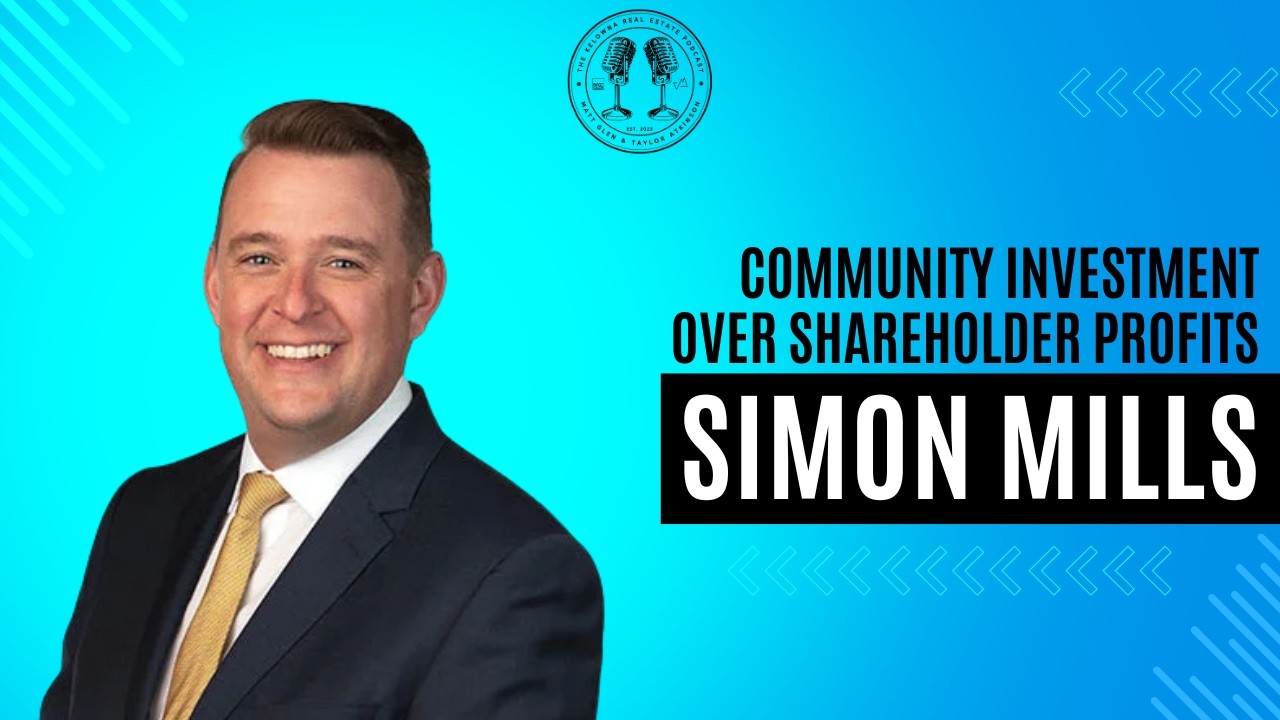
WATCH
▶️ Watch this episode on YouTube
***
EPISODE DESCRIPTION
Episode 126: Matt and Taylor are joined by Simon Mills.
Simon is the President of Valley First, a division of Tru Cooperative Bank, from Kelowna, BC, who joined Valley First in 2019 as the Director of Commercial Banking before becoming President in 2023.
With over 16 years of experience in banking, Simon moved to Vancouver from the UK in 2014 while working for HSBC. When that job ended, he didn't want to leave, so he joined Valley First and made his home in the Okanagan.
Simon is a solution-focused leader and is passionate about building member relationships and driving member loyalty, drawing on his breadth of experiences in portfolio & risk management to make a difference in the community where he serves and lives. Simon is also active in Valley First’s signature cause, Feed the Valley, and is dedicated to strengthening the credit union movement across Canada.
With approximately $20 billion in total assets and assets under administration, and more than 291,000 members, Tru Cooperative Bank, formerly First West Credit Union, is one of Canada’s largest credit unions. Through four locally known brands that include Valley First, Envision Financial, Enderby & District Financial, and Island Savings, they provide service and advice that reflects local economies and meets the needs of those who live, work, and play in our communities.
Simon is here to discuss:
→ His journey through banking, how he ended up in Kelowna and became President of Valley First, and the changes he has seen to the city since arriving in 2019.
→ What a credit union is, the similarities and differences they have with the big banks, and how they are beneficial to the communities they serve.
→ Valley First's origins and recent rebrand, the benefits of merging under Tru Cooperative Bank, and what they are looking to invest in moving forward.
→ If Kelowna is moving in the right economic direction, what sectors are currently over or under performing, and the status of both it's residential and commercial markets.
→ The factors impacting affordability including which areas have room to give like land cost and taxes and if consumers expectations are too high.
→ How constant government intervention is destabilizing Canadian housing, citing the proposed $1.4B bailout of Vancouver condos, and harming long-term market health.
***
CONNECT WITH THE GUEST
🌎 Valley First Website: www.trucooperativebank.ca/valley-first
📸 Valley First Instagram: @valleyfirst
🔗 Valley First LinkedIn: @ValleyFirst
📺 Valley First YouTube: @Valley_First
🌲 Valley First LinkTree: @ValleyFirst
🔗 Simon Mills' LinkedIn: @SimonMills
***
MDDL U'S INTRO TO MIDDLE HOUSING COURSE
To receive your promo code for FREE access as a Kelowna resident or 50% off as a BC resident, email: hello@mddl.co
*Registration is open until August 20th, 2026.
***
CONNECT WITH THE SHOW
🎙️ Kelowna Real Estate Podcast: www.kelownarealestatepodcast.com
📺 Kelowna Real Estate Podcast YouTube: @KelownaRealEstatePodcast
📸 Kelowna Real Estate Podcast Instagram: @kelownarealestatepodcast
***
CONNECT WITH MATT
🌎 Matt Glen's Website: www.venturecommercial.ca/our-team/matt-glen
📬 Matt Glen's Email: matt.glen@venturecommercial.ca
📸 Matt Glen's Instagram: @realmattglen
***
CONNECT WITH TAYLOR
🌎 Taylor Atkinson's Website: www.venturemortgages.com
📬 Taylor Atkinson's Email: taylor@venturemortgages.com
📸 Taylor Atkinson's Instagram: @VentureMortgages
***
00:00:00 Taylor Atkinson
Welcome back to the Kelowna Real Estate Podcast. I'm your mortgage broker host, Taylor Atkinson. And I'm your commercial agent host, Matt Glen. What's happening, Taylor? Oh man, relived childhood yesterday. Went to the Vernon water slides. Amazing. They did a wicked yes. That is awesome. I went there as a kid when it was Atlantis.
00:00:18 Matt Glen
a kid when it was Atlantis. What's it called now? Splash Town? Splash Down? Splash Down, yeah. Yeah. Splash down. It's awesome. We went there last year with our kids. It is fantastic. What a great date. Did you guys rent a cabana there or did you get a table or no,
00:00:32 Taylor Atkinson
they got like hundreds of picnic tables with umbrellas. So yes. Yeah. It was my birthday yesterday. Happy birthday. Thank you. Yeah. I lived at the watersides in West Kelowna, Mariners reef and went wild were the names of, yeah, when they did an HH, but like, it was great, man. And like. Joey and Leo, two and four, just loved every second of it, surpassed expectations. And they're still investing there. They're building two more slides right now. Yeah, I know you talked about this last year. It's been on the list. So if you haven't checked it out, if you got kids, awesome place. Agreed. Considering where we are right now as well, we can talk about it a little bit. We just had Bank of Canada come out with one of their eight announcements a year. nothing changed right overnight rate variable rate stays the same which was as expected essentially you know to summarize what's going on there is inflation is you know, still higher than we would like. So really the mandate of Bank of Canada is to increase rates to curb inflation. However, it's kind of not high enough for them to do that, especially economically where we're at GDP job numbers. We are not doing that great as a country. So, you know, they don't really want to kind of stimulate the economy to have the offset of inflation and vice versa. So they're in that neutral period where they're just kind of sitting on their hands, which. It's good. Provide some stability. Do you understand any rate changes this year? I mean, yeah. Well, when we spoke with Brennan Augmentson a couple episodes ago, yes, there should be probably like a quarter point, maybe half a point in the next 12 -ish months. The reason I say should is exactly that. Like inflation just keeps in that higher level. Like it does, you know, come down. But as we all know, like gas prices, grocery stores, like it's... it's still hot and maybe this will just become more normalized, right? Like inflation will be based on previous years and the trajectory it's going. So once we get some more stabilization there, but I think a lot of that inflation was driven from conflict in the Middle East, right? Having fuel prices just absolutely skyrocket because we couldn't get transport. So I think with that, hopefully resolving, let's just hope. leadership in the States kind of stops invading countries. I would not plan for that thing to be resolved in the short term.
00:02:51 Matt Glen
in the short term. Yeah. There's no exit strategy.
00:02:54 Taylor Atkinson
Yeah. We'll see what happens there. If there's more stabilization and we can kind of curb inflation a little bit, like maybe a quarter point increase, that would be digestible to everyone.
00:03:04 Matt Glen
Increase of the interest rate?
00:03:06 Taylor Atkinson
Yeah, really. If they're going to have to kind of bring down inflation, like let's just hope it kind of settles down naturally, but that's likely. you know, on their list of next little steps. But we've seen fixed rates finally drop, right? So the bond market was up again, primarily because what was going on in the Middle East that had a lot of upward pressure. As soon as that had a resolution, you know, fixed rates have kind of come back down. So yeah, we're seeing that spread between variable and fixed kind of shrink and people have a few more options. Other things in the news. I mean, not that we know much about it. I don't think anybody does. Typical government comes out with a policy, doesn't really have anything to back it. But essentially, federal and BC government announced 1 .4 billion initiative to purchase 2200 unsold vacant condos across the province, specifically in the lower mainland. That's kind of all we'll talk about at this point. I'm sure in the coming months, there'll be lots of media on that. I don't love it. Personally, I think. You know, you're setting a precedent now for more government intervention. What developers get the bailout and like who doesn't like the whole point of all these policies in the previous few years with speculation tax and foreign buyers tax and vacancy tax and flipping tax was to suppress our, you know, residential market to allow people to buy. And now that they have kind of like forced that and undercut these units to drop in value, the opportunity should be presented to you know home buyers instead of the government coming like let the values fall we'll let them fall to a point that people are going to buy them like i don't understand you know why we're getting involved as a government it doesn't it's actually honestly like on a kind of a tangent it's actually amazing that the foreign buyer ban is still on like you know i don't understand what problems are solving at this point you know like we're buying 2200 condos but we won't let anyone that's not a canadian by all i just don't understand so i have her grumblings that
00:04:49 Matt Glen
it's actually honestly like on a kind of a tangent it's actually amazing that the foreign buyer ban is still on like you know i don't
00:04:56 Taylor Atkinson
understand what problems are solving at this point you
00:04:58 Matt Glen
know like we're buying 2200 condos but we won't let anyone that's not a canadian by all i just don't understand so i have her grumblings that Like loan is on the menu too. They might get a couple here. I don't know if that's true or not.
00:05:11 Taylor Atkinson
Like it's taxpayers' dollars that are then buying these units to one, help the developer, but two, I guess provide some form of housing.
00:05:22 Matt Glen
Housing prices, it's just expensive. It's going up all the time. OPC inflation. Is it sustainable to have house prices go this high? It says like this, the government is basically just saying, we want the house prices this high.
00:05:33 Taylor Atkinson
It's sending a mixed message. For sure. I think the confidence in the government, you're trying to appease one sector with, you know, a handful of developers and you're pissing off for some home buyers, but then you're coming out with first time home buyer policies and then you're pissing off the developer, like just back out of it and let the work. It's like an amazing amount of like lever pulling.
00:05:51 Matt Glen
work. It's like an
00:05:53 Taylor Atkinson
of like lever pulling.
00:05:55 Matt Glen
Yeah. Yeah. And it doesn't seem to be focused in one direction. It's kind of crazy. It's just. We're all along this ride. There is benefit of a rent -to -own program, but I guess like you're having all these unsold condos. Government comes in, buys them. Does a rent -to -own program for some home buyers or whoever supplied personal residence, I assume. I guess we don't know. But like, it just seems like that is just to keep house prices high and make the banks happen. And the developer can move on to start building the other homes.
00:06:26 Taylor Atkinson
Yeah. We'll maybe do a full episode on this and... you know, a month or so once, um, we actually get some data that's coming out of this. Cause yeah, like we said, typical just kind of comes out with a headline policy. Like there's not a lot of transparency on how it's going to develop over the next, you know, coming months, but kind of speaking about, you know, investing in local economy today, we had on president of Valley first, Simon Mills, awesome guests, credit unions. I always knew they were very important to our local economy. I don't think I'd probably knew how important they are and kind of you know how they started so he kind of pulls back the curtain on that but yeah awesome to see like generally like as a mortgage broker when clients are coming to you looking to you know build houses or buy specific you know very unique properties within the the region whether it's like alr like agriculture you know farmland wineries vacation properties stuff like that Credit unions are the go -to. I think it's because they know the area so well, they know the risk and they know the opportunity, but they really invest in driving our local economy and self -employed people.
00:07:33 Matt Glen
So, yeah, it was a fun show chatting to him.
00:07:35 Taylor Atkinson
to him.
00:07:36 Matt Glen
It was. He's a funny guy and it was a good show to record. Glad we had him up. Obviously, like Valley First 2 is a huge pillar in Kelowna business community.
00:07:45 Taylor Atkinson
Yeah. So enjoy the show guys. Uh, we had a bit of a hiatus the last few weeks, you know, summer vacations kind of been, uh, yeah, we're all trying to enjoy the summer. It's been, it's been an awesome summer so far. So yeah, it's been a great,
00:07:57 Matt Glen
it's been a great,
00:07:58 Taylor Atkinson
a great summer.
00:07:59 Matt Glen
Yeah. Also don't forget to like and subscribe, whatever else you do to, uh, vote our show. What do you do?
00:08:05 Taylor Atkinson
do you do? Comment? What else is there? Yeah. Comments are great. Hey, like get some interaction, especially when, um, yeah, people have questions for the guests. We can always relay those on and. Yeah. They didn't get back to you. Absolutely. Yeah. Okay. Enjoy the show guys and enjoy summer.
00:08:23 Taylor Atkinson
All right. Welcome to the show. Simon Mills from a Valley first true cooperative bank. You guys just had a. rebranding name change maybe we can kind of start with you know your position and yeah what's going on in the business thank you and i really appreciate uh the invite to be part of your podcast today and have a conversation around colonna which is like super i'm super passionate about and love talking about colonna and the opportunity so yeah no thank you yeah we have gone through a rebrand in the first half of this year and uh we're now instead of first west credit union the president valley first which is a division
00:08:35 Simon Mills
you and i really appreciate uh the invite to be part of your podcast today and have a conversation around colonna which is like super i'm super passionate about and love talking about colonna and the opportunity so yeah no thank you yeah we have gone through a rebrand in the first half of this year and uh we're now instead of first west credit union the president valley first which is a division of the true cooperative bank but was previously known as first was credit union which was a credit union formed through merger of three credit you were four credit unions really which was enderbean district valley first envision financial which is in the lower mainland and then island savings which is on the island so those Four brands make up what is named True Cooperative Bank, and that aligns with our recent federal OSFI approval that came through. And we're now a national credit union. So we're now able to operate outside of BC and across the country, which is really exciting. And that all came at once. We had a new name, a new online banking tool, and also our federal approval came in in the first half of this year. So it's been a very exciting start to 2026, that's for sure.
00:09:43 Matt Glen
yeah you're a president they can boost yes yeah yeah and then we've already started so we've already launched our mortgage broker channel in in ontario and we're funding residential mortgages in ontario already which is really exciting so now now is that we're ready to support members who want to do business outside of bc which is already happening and is that primarily what the purpose or opportunity was to do inter -provincial federal
00:09:46 Simon Mills
yeah yeah and then we've already started so we've already launched our mortgage broker channel in in ontario and we're funding residential mortgages in ontario already which is really exciting so now now is that we're ready to support members who want to do business outside of bc which is already happening
00:10:03 Taylor Atkinson
is that primarily what the purpose or opportunity was to do inter -provincial federal Lending or does it change internal policies as well? Can you guys go into different like assets or type of lending or small businesses? Like what's the benefit?
00:10:19 Simon Mills
No, but the benefit allows us to continue to grow and grow potentially with like -minded credit union partners outside of BC as well. But really, the idea for us is to continue to grow and be an alternative financial institution for our members too and support them in their growing needs. We see a lot of our members move outside of BC with remote work and COVID really drove that change. And so we want to continue to support those members. We don't want to be... tied to borders within our country it allows us to support in the best way possible and past standards are already operating within our sphere anyway so it wasn't a big change from that perspective it's like your career path how did you end up the president of l1st
00:10:59 Matt Glen
end up the
00:11:00 Simon Mills
president of l1st Well, it's an interesting one, actually, because I came to Canada in 2014. I used to work for HSBC, and I was an international trade banker with HSBC. So my role there was really to deal with importers and exporters, and they sent me to Vancouver in 2014. And that's where I spent a good chunk of time dealing with importers, exporters, rolling out new products and solutions for HSBC. But then I didn't want to leave Canada. I didn't even know what a credit union was when I joined in 2019. Came on board to lead the commercial banking division, continue to grow and create opportunity there. And it sort of flowed into the president role about three years ago, which was quite exciting when we went through some changes. So it's been a journey, but actually before 2019, I didn't know what a credit union was. I'd never heard of one. We have building societies in cooperatives in Europe and in the UK, which is where I'm originally from. But I remember when the opportunity came out, I was like, well, what's a credit union? But then when I got to understand what a cooperative financial institution really is and what it can do and the values and the purpose of the organization and how they were formed in these communities and what value that they bring, it was so powerful, plus the opportunity to live in. Paradise, which is the Okanagan. It was an easy transition.
00:12:22 Taylor Atkinson
So did you kind of choose Kelowna or did Kelowna choose you? How did you end up here?
00:12:27 Simon Mills
Well, originally when we came here, I came up for two days to tour around, meet the then president at the time. And we fell in love with Kelowna. We traveled through on our motorbike. This was before we had kids and I love my motorcycle. So my wife and I would travel through and we would visit the area, but we never spent a lot of time. And then we spent a couple of days here and literally fell in love with it. had a one -year -old daughter at the time and we wanted to grow the family and we just knew that this is where we could have a family grow a family but also it was right smack bang in the middle of the region that i covered so colina made sense and it's just such a great community that's been so welcoming and warming the last sort of seven years have been uh pretty fantastic in your light of work you're paying attention to how the economy is doing how the business is going like what kind of changes have you seen from then until now and i guess all the crazy times between what are you noticing can speak firsthand to that because when i came here in 2019 and the idea was we would move here we would look around we would get to fill for which area do we want to live in and which area do we want to buy it so we rented for
00:13:10 Matt Glen
your light of work you're paying attention to how the economy is doing how the business is going like what kind of changes have you seen from then until now and i guess all the crazy times between what are you noticing can
00:13:19 Simon Mills
speak firsthand to that because when i came here in 2019 and the idea was we would move here we would look around we would get to fill for which area do we want to live in and which area do we want to buy it so we rented for must be in the low emission. And we thought, yes, market shifted, COVID hit and houses we were looking at suddenly, you know, went up 20%, 30 % overnight. And actually we got into the struggle where we were unable to purchase a house because of either the asking price, the conditions that we were, you know, I wanted an infection.
00:13:54 Matt Glen
You wanted a crazy thing like an inspection?
00:13:56 Simon Mills
I know. I want.
00:13:59 Simon Mills
Who? so yeah what he was i couldn't compete and yeah when he won 22 failed offers we had and it got really challenging yeah the time when we had to move out of our rental too because that bit sold so the good out of that situation there was one the community support i got to find accommodation to keep us here because again at the time short -term rentals was booming so the rental space was really really tough but then also we found a spec home that was partially constructed up where we live now and we were able to purchase that so it was a real journey but oh my gosh did it explode that really put us on the map and it was fairly stagnant before that i would say is a word i use but that really boosted colonna and the okanagan and really was the catalyst i think to a lot of the change that we see now the airport, you know, our UNESCO designation for gastronomy now that we have, you know, the expansions of college and the overall growth within the city. So that really suddenly, you know, lit a fire under it, which were crazy. They were crazy times, but yeah.
00:15:06 Taylor Atkinson
Coming from the UK, like having a more international background, working in kind of larger cities. Do you think like Kelowna is moving in the right direction? Obviously, you know, it's a beautiful place and the infrastructure's, you know, wonderful, but like economically, you know, is it? becoming unhealthy? Like you went through that difficult time to buy. Are you looking at this as,
00:15:28 Matt Glen
you know, hey,
00:15:28 Taylor Atkinson
hey, this is just like natural growth and growing pains that cities kind of have to endure? Or what direction would you like it to see to go from now?
00:15:37 Simon Mills
And it's a great question because I think we're at a pivotal point in the city and in our growth and, you know, within not just BC, but then also the Canadian landscape as well. Yeah. Overall, I would describe that sort of the Okanagan economy is resilient and it's fundamentally healthy. And we continue to sort of benefit from some population growth. We have seen a bit of migration out in certain sectors, but it's a disarmable lifestyle. There's a ton of entrepreneurial energy here. It's a more diversified economy that I think people realize or think it is. So, you know, we have technology, professional services, agriculture, agritourism, healthcare. you know tourism we all know about the tourism side but constructions and logistics really would all contribute to that the region that we have today but that said i think every growing economy faces pressure housing affordability labor availability infrastructure needs and just general business operating costs are creating challenges that need attention and we need to be really mindful of that and be really intentional so i'd say we're not lacking opportunity the challenge is making sure that we can keep up with that opportunity. We're seeing some readjustment. We are going through a bit of pain, I would say, in certain areas. You guys see land values and things like that. But I think the economy's healthy. We have a higher unemployment rate. So healthy, you know... question mark next trip but we're in a phase right now so we just need to make sure that we continue to support local business small business and that's kind of primarily where i mean i could be a bit off but that's primarily where credit unions strength is right in supporting local businesses entrepreneurs so like what are you guys specifically looking to invest in like deploy capital projects is it
00:17:06 Taylor Atkinson
that's kind of primarily where i mean i could be a bit off but that's primarily where credit unions strength is right in supporting local businesses entrepreneurs so like what are you guys specifically looking to invest in like deploy capital projects is it construction are you guys kind of pulling back on that like i'm talking about like from raw land to residential to commercial build out or are you looking for more like active businesses all of the above i would say one of the things with the credit union and one of the things we strive for is consistency so regardless of what's happening in the market environment and what we're seeing you know we don't suddenly restrict appetite in certain areas do we do more due diligence and certain things like real estate right now for sure because we need to make sure that
00:17:31 Simon Mills
of the above i would say one of the things with the credit union and one of the things we strive for is consistency so regardless of what's happening in the market environment and what we're seeing you know we don't suddenly restrict appetite in certain areas do we do more due diligence and certain things like real estate right now for sure because we need to make sure that you know as custodians of our members deposits that we are doing a full assessment we fully understand what we're doing but also making sure that the members that we're working with you know have a sustainable plan and that they're also you know looking to achieve what they're trying to add whether it's a project or something along those lines but we love hospitality agriculture we support you know small business we're continuing to diversify our business as well so we want to do more in the operating you know, sort of business space as well. Do we do more due diligence in certain sectors? Yes. Or ask more questions just because we want to make sure as custodians of our members' deposits that we're doing it correctly and we're taking that into account. We're not saying, no, we don't want to be in certain spaces because that doesn't really help our members and our community. And if you look at our community as you drive around, small to medium business. Now, just for the record, I don't like the term small business because there's nothing small about business to create a job that pays you every two weeks, it gives you benefits, that, yeah, RSP contributions and all of that good stuff to, you know, start a dream or to grow a business. Like, there's nothing more about that. And so I tend to call it independent business, but it's the backbone of our economy. It's the backbone of the market.
00:19:05 Matt Glen
Have you seen any sectors, like, outperforming others or underperforming, I guess, at the same time?
00:19:10 Simon Mills
I'd say healthcare continues to be a strong performer. So whether it's dentistry or healthcare support, that space.
00:19:17 Matt Glen
So from my personal experience, I work with a few dentists looking to release and buy spaces. So that also. But I think that also goes to the demographics of our market too.
00:19:23 Simon Mills
I think that also goes to the demographics of our market too. Yeah,
00:19:26 Matt Glen
we have nice teeth.
00:19:27 Simon Mills
This is it. This is it. The way the prison part is very known for their nice teeth. Like, what are they running? I'm working on it. Working on it. But, you know, that space. yeah agriculture is sort of i would say to a certain degree stabilized a couple of tough years there and we continue to see a readjustment in land values and values in that space that's a challenge and the general residential construction from my perspective where i see sort of activity still townhomes still continue to be activity in that space single only homes anywhere into that 1 .5 million with a suite in with the CMHC sort of financing. Everything else is pretty slow right now. But the performance of numbers don't make sense right now. So you have to have... What do you think has to give on the numbers?
00:20:17 Matt Glen
do you think has to give on the numbers? Do you think it's land values or is it interest rates or is it labor costs or material costs? Where do you see the give for this market to stabilize? Because when I think about it... like the land values are high for sure so they have to come down but like i don't see wages coming down i don't see building materials coming down like taxes like dccs or like government help like where do you think is going to give to help with the affordability well it's a great question and um this topical conversation right now you know you're not going to see wages coming down people can't afford for wages to come down i mean they're already kind of
00:20:44 Simon Mills
it's a great question and um this topical conversation right now you know you're not going to see wages coming down people can't afford for
00:20:50 Matt Glen
wages to come down i mean they're already kind of
00:20:53 Simon Mills
Yeah. You know, interest rates, I think, how much lower can you really go? We're only just coming out of those five -year fixed rates that were 2%, you know, back then. And we're actually coming to the end of that sort of repricing as such. But that repricing's hitting the commercial side too. I think it has to be land values. I mean, there was a lot of people getting into development and a lot of speculation that was driving up land values. And then the taxes and fees. We'll see some compression when it comes to some compression in building costs, you know, and as demand is falling off, you know, contractors are tightening up on their pricing. But ultimately, everything you're importing and, you know, if you look at the international market with imports and the trade barriers and even the quota system right now, on steel out of Asia, it's artificially keeping all the prices up because you're having a tariff on your import. So really, to me, it's the land. It's that input land cost and then the taxes. We're seeing a breakup. We're seeing the DCCs in Kelowna, which I think would be good. There isn't much wiggle room, so you've got to make sure we build a bit more contingency into this.
00:22:02 Matt Glen
It seems like it's a good opportunity for an extremely efficient builder and developer to take advantage of the market. It seems to be the only way. to make it even come close to Pennsylvania. We've got a high amount of vacancy coming on for rental,
00:22:13 Simon Mills
got a high amount of vacancy coming on for rental, which is good, you know, sort of stabilized. I wouldn't say the rents have stabilized, yet there's the volatility in it. But as that gets absorbed, it's going to, you know, also contribute to the city being attractive to migration. But we need jobs. We need good paying jobs, sustainable jobs. You know, we need to focus there because if the economy and jobs are not there, then...
00:22:40 Taylor Atkinson
I mean, I think we need also, we've spoken about this, is less volatility from a leadership role. And that comes into play. I mean, haven't really spoken about it yet on the show, but we will as like government bailout for developers in Vancouver right now. That adds so much volatility of like, how does that set the precedent? And where does it stop? And who gets the bailout? And how does that look? But government intervention at a housing shelter, you know, should not be, well, there shouldn't be. government intervention.
00:23:09 Matt Glen
intervention.
00:23:09 Taylor Atkinson
And so they've kind of like caused the ripple and then tried to stop it. And then like they're constantly playing with that stuff. So I think for me, that's one obvious thing is we need less intervention and then also like expectations from consumers. I think that's the biggest one is, you know, we all want a nice house with. all the bells and whistles and pools and garages but at the end of the day like it's just shelter and you know if we want this quote unquote affordable housing and that's not a million and a half dollar home you know there are builders that can build I guess more realistic shelter needs but no one's really willing to build it and no one's really willing to buy it right we all blame the government of like well we need cheaper land DCCs interest rates all these things but at the end of the day like if you just want somewhere to you know sleep and eat we need to reset our expectations a little bit i mean i still haven't seen the terms and conditions of that sort of bailout so i don't yeah neither are we nobody else yeah yeah that sort of stuff creates a ton of noise which like bankers don't like volatility like some bankers trust me investment bankers those guys that you know
00:24:02 Simon Mills
mean i still haven't seen the terms and conditions of that sort of bailout so i don't yeah
00:24:07 Taylor Atkinson
are we nobody else yeah yeah that
00:24:10 Simon Mills
sort of stuff creates a ton of noise which like bankers don't like volatility like some bankers trust me investment bankers those guys that you know
00:24:22 Matt Glen
Yeah,
00:24:24 Simon Mills
but for us as traditional bankers, whether we're retail wealth or commercial, we want stability because that creates predictability. And through that, then you create investment and people feel comfortable with continuing to invest. buy a new building hire new people because you feel comfortable investing in growth and there's too much volatility that the thing is i think as well if you're going to put 30 million dollars into building like a six -story condo 30 40 million dollars i mean that's a big huge chunk of of money you got to know one that you're going to get a good return because that's a huge amount of risk but also You know, as a lender, I need to know that and custodians of my members deposits because my members deposits that I'm getting money back and make a good return for my membership. But also the developers need to know that they are going to come out too. So there is a challenge. But also, yeah, there was a lot of speculation going on. Huge amounts of speculation.
00:25:25 Taylor Atkinson
I mean, you've said it a couple of times, custodians of our members deposits. Can we kind of talk about maybe we should have started with this, but. probably a good way to finish is what is a credit union? How does it operate differently than, you know, one of the big five banks? I'll start with what's the same in the sense of,
00:25:38 Simon Mills
start with what's the same in the sense of, you know, if I can put it that way. So we offer the same. products and solutions a chartered bank would do. So whether that's mortgages, loans, savings, deposits, GICs, wealth solutions, so wealth advisors, all the way to the sort of traditional retail banking. So when it comes to products and solutions, we're the same. We're highly competitive in that space. We're very strong in residential mortgables and things like that. What you get with a cooperative financial institution like ours or a credit union is that we rely on our members' deposits to fund the growth in the business. And the reason that the Valley First was formed in the first place like some 80 years ago was the big charters left town because it was a challenging agricultural environment at the time. So a group of farmers came around a table, formed a credit union. invested in some savings they had and led to the community to grow the community because there was nobody here to support the growth and so that's how we formed and so we take those deposits in and we deploy those through many different channels whether it's commercial business that we tell but the profits that we make And the money we make goes back into the system for the benefit of the members. So, you know, you come and open an account with us. Five bucks, you buy shares. So you get shares with your five bucks. You're my shareholder. We don't call your clients. We call your members because you're a member. And I'm responsible to you as the shareholder. So my responsibility is not pure profit. You know, I want to make as much money as humanly possible. That's obviously, you know, I want to be profitable. I want to be sustainable. But I've got a different lens in the sense of we can lean into projects and businesses that maybe other institutions wouldn't because we know our market, we know the people, we know what's going on, you know, and we have a bit of a bubble here in Kelowna. We do, which has supported us and benefited us. We get to make decisions in a more local way. We are local. My credit decision team are here. My lending teams are here. Yes, we're spread across BC, but each region knows their market. We connect with the elected officials. We connect with the members. And so we can add that value. And the money we make goes back into the system. So we just launched our new online digital banking platform. You know, we can invest in things like that, which is better for the members rather than an unknown shareholder in an unknown jurisdictional country, you know, because we're so worried about our share price. And then we deploy money, lastly, on that in through our community investment. So we support a number of initiatives. in our market and areas and sort of needs, whether it's health and wellness, mental health, food insecurity, we're big supporters and work closely with food banks across our market. So we can lean into that community aspect because at the end of the day, I love this community. This is home. I'm not leaving. And I want to see it continue to grow, flourish, and be a great place for my kids when they grow up to. Hey, what are you seeing there, guys? I mean, anything that you want to share?
00:28:41 Taylor Atkinson
Yeah, I mean, on the residential side, it's been pretty flat this summer. But like you said, a lot of the five -year fixed from 2021 era are coming to maturity. There's lots of, I guess, opportunity for... people to restructure some finances and some debt but i think primarily what we've been seeing you know like working with credit unions on residential builds it's definitely been harder for people to justify new builds right the cost of it really you can buy an existing house and do a bit of a reno like there's probably more value there than building a new house right now so that's where the struggle is we find with home builders. And then on the commercial side, it's a bit stronger than I would have anticipated like a couple of years ago. And like you said, like there's tons of entrepreneurs in Kelowna, which is interesting, right? Lots of dentists looking to expand, but all these self -employed people with no dental benefits can still afford a dentist, obviously. It's been a good market. A couple of years ago, I was more pessimistic or frustrated, like, oh, the market here is not moving. But like you said, when you bought or when you tried to buy in 2021 that was a terrible market the only way you could secure something is over ask no subjects quick close like there's so much risk now it's balance it's like okay property's been on the market for a month or two They get an accepted offer. There's 10 days for subject removal. There's inspections. There's due diligence. Like, you know, we all got used to this like crazy time where things just moved so quickly and there was no real thought in it. And, you know, a purchase price was a million bucks or 1 .1, but nobody really cared because it was such a big number. And, you know, you didn't really think about your mortgage payment at the time. Your mortgage rates were low too.
00:30:22 Matt Glen
low too. So, yeah, even if you were thinking about it, it still made sense.
00:30:27 Simon Mills
That's what people said to me. They said, well, you know, your mortgage rate's only 2%. It's like. Yeah, it is today. You know, where is it going to be in five years? I know that.
00:30:39 Matt Glen
Yeah, that's kind of interesting to see for some podcasts about the US and it's like they have a 30 year mortgages. So like they locked in low rates, but then they can't sell. So like now, like the sales are way down because nobody can like you're going to take a huge discount on a house. Like your rate is just fundamentally different than the house you have. So like nobody's selling. So it's kind of a Interesting way to look at.
00:31:02 Simon Mills
Well, I think what it has driven is a real thought into affordability and households really having to think about affordability. What can I afford realistically? And planning for the what if too. So we have a lot of planning conversations, but people would say to me, did you go variable or fix? No, I took a fix because I was never going to see a fix that low. uh so i'm like i'll take that all day long but i think a lot of people are now looking at it going okay well you know what's my lifestyle what do i want to achieve okay well maybe i'll take a fix because that gives me a guarantee on what my payment's going to be for the next five years and as opposed to playing the variable game the volatility causes issues in that side of things you know but um it's definitely an interesting environment though you know i am seeing more activity more discussions more also innovation i would say in local businesses which is really good yeah like my business like switching into commercial real estate and focusing on leasing my god there's so much activity in the leasing space our whole office is singing busy with this like sales are down for sure this year but like there are businesses making moves everywhere and it's kind of nice to see like it's
00:31:56 Matt Glen
like my business like switching into commercial real estate and focusing on leasing my god there's so much activity in the leasing space our whole office is singing busy with this like sales are down for sure this year but like there are businesses making moves everywhere and it's kind of nice to see like it's on the residential side is don't see that right now. It was very eye -opening to me as how many like businesses are on the move or expanding or opening new spaces and it's been a great witness to be a part of.
00:32:23 Simon Mills
And that's good to hear. I have another question for you too. Is there anything you guys are seeing out in the market that we should know about or that you think that we might not be aware of or that benefits our community, our market and continuing to? you know, sort of grows and strength and stuff like that. Is there anything that we miss actively?
00:32:42 Taylor Atkinson
We'll see where this one goes. So I think specifically there's an opportunity at Big White. I think financing properties up there can be incredibly complex, specifically in snow pines with the way it's set up. For sure. Yeah. And clients, but like all over Big White, right? Like it becomes very difficult to find lenders that have an appetite and it seems to change fairly frequently. I think there's an opportunity, like let's just. specified in snow pines right there's essentially a fourplex but it's one title so it's a shareholder structure where you know you're buying in as a percentage most lenders are not comfortable with that to me it seems like a simple solution that one lender would come in and then instead of having four lenders because there's four owners on one title and lenders have a massive risk in terms of where they're positioned on that one lender should just come in and eat up that market and i know that would like deploy their book of business more on that but you know if one lender had one building and you know they have four owners they have all four positions on that so i think you know in terms of i don't know if it would really like help our local economy per se although big white's a big driver of tourism here there's a lot of builders up there and a lot of infrastructure that you know can help that would trickle down the effect in the economy i think having better policies up there with a local lender that understands it could be somewhere for some growth to happen.
00:34:03 Simon Mills
That's interesting because I'd not heard of that structure before up there. So having a sort of a shareholder structure, yeah, having four lenders in that would be complicated and challenging. So I can understand that. So I'll have to take that away and have a chat from the team. Just for note, we were the first financial institution to go back into Big White back in 2020. And I think there was a 12 -year hiatus on any new construction, something like that. And we looked to that market, looked to the community and said, yeah, okay, let's support. Because if we can continue to flourish at Big White and can see that grow, oh, that would be so good for our city. I did finance a property with you guys up there last year.
00:34:42 Taylor Atkinson
did finance a property with you guys up there last year. Like every lender is so case by case at Big White. wild. So I think there's a bit of an opportunity there specific more to like the valley region. There's actually like great policies from credit unions specifically for First Nations land and mobile home parks. Like there's a lot of like local credit unions like you guys specifically that do really well in those spaces because you obviously understand like some of those lease structures where some of the bigger banks are monoline lenders we can't facilitate any lending with. I think from that side, yeah, you guys are doing an awesome job.
00:35:19 Simon Mills
Oh, well, thank you for that. Thanks for that feedback. And also thank you for your membership too, because you're a member.
00:35:23 Taylor Atkinson
I am.
00:35:24 Simon Mills
Yeah. Can't do it without you. So appreciate it. Thank you.
00:35:29 Taylor Atkinson
We'll probably have to start moving to wrap this up, but I guess maybe like a final take on this is what are your goals as a credit union moving forward? Like where would you be happy to see, you know, in two, three years, if we were to come back to this conversation? takeaway that you could be like, hey, this is something that we've been working on and we were successful at achieving that.
00:35:48 Simon Mills
Well, I think that's just something I've been in one paragraph. I mean, I think the Okinawan continues to be one of the most attractive regions in Canada to live, work and invest. So our job. at Valley First and as part of the True Cooperative Bank is really to help individuals and businesses navigate that growth confidently and sustainably. So I hope that if we came back in two years that we've continued to deepen our roots in business and in commercial and all the segments of commercial, but really demonstrate that by having us in town, has a marked impact on the local economy and the communities we serve and that we can demonstrate that we are supporting that and we are a growth factor in that so you know with ai coming that's only going to help our ability to do that and to really spend more time understanding our members needs and then being able to provide solutions and recommendations and be a trusted partner and not be just a commodity or a transaction. It's about that partnership and that relationship. So if we can continue to sort of execute there and support and stay true to our roots, because at the end of the day, it was 80 odd years ago is where we were founded. And it's the commitment from all of the communities that we serve is what allows us to do what we're doing and we want to. hey, that I can deliver for our membership. So in a couple of years time, I hope that we can demonstrate that and I can show you an impact report that says, look, we're having an impact and it's a positive one. I love it.
00:37:17 Taylor Atkinson
love it. Thanks for coming on and thanks for the work you guys are doing. You are a driver for our local economy and, you know, building and independent businesses, as you phrased it, which I like. So yeah, I appreciate the work you guys are doing.
00:37:30 Simon Mills
Well, thank you for that. We're also having a feedback too. So you hear anything. We don't sometimes get feedback, only negative. you know yeah you're not the only one so let us know and stay connected but thank you for the connections and um yeah what you guys doing and just keep us posted i will take away your structure though that's an interesting structure i'm not at that site yeah we can connect offline happy to tell you all about it but yeah i think there's an opportunity for the right lender in there and if you want to come down watch england beat argent yes we never touched on that yeah enable it the yacht club at noon
00:37:50 Taylor Atkinson
we can connect offline happy to tell you all about it but yeah i think there's an opportunity for the right lender in there and
00:37:56 Simon Mills
if you want to come down watch england beat argent yes we never touched on that yeah enable it the yacht club at noon
00:38:04 Taylor Atkinson
I was just going to say you're clearly cheering for Argentina, right?
00:38:11 Simon Mills
But I really appreciate the opportunity to try this as well. So some thanks for this.
00:38:17 Matt Glen
Thanks a lot, Simon.
00:38:18 Simon Mills
All right, guys. Catch up with you soon.
00:38:19 Matt Glen
soon. All right. Yeah. See you later.